
Guides to Chongqing
Practical tips, neighbourhoods and places worth exploring, chosen by our team.
Essentials
Useful Chinese phrases for Chongqing: cards to show
Phrase cards to show a taxi driver, pharmacist or waiter, no pronunciation needed. Taxi, doctor, restaurant and everyday basics, plus how hotpot spice levels work and the Chongqing words you'll hear first.
Address registration and residence permits in Chongqing
Every foreigner in Chongqing has to be registered at their address within 24 hours, and anyone here to work, study or join family needs a residence permit within 30 days. Since March 2026 Chongqing lets you register a private flat online. Here is how both steps work, where to go and what to bring.
Phone numbers and SIM cards in Chongqing
A Chinese number is what makes banking, payment apps, taxis and delivery work in Chongqing. You get one in person with your passport at an operator's own hall. Here is what to bring, how eSIM works now, and how to keep the number when you leave for a while.
Money and payments in Chongqing: Alipay, WeChat Pay, cash and bank accounts
In Chongqing almost everyone pays by phone, and since 2024 foreigners can do the same with a card from home. This guide covers what the apps charge, where foreign cards and cash still work, and how to open a local bank account once you live here.
Healthcare in English in Chongqing: hospitals, pharmacies and dentists
Chinese hospitals are big, fast and run on apps, and Chongqing has something most cities don't: a set of 24-hour bilingual hotlines at its main hospitals. This guide covers how a hospital visit works, which numbers to save, what to do in an emergency, and how to handle pharmacies and dentists.
Getting around Chongqing: metro, monorail, cableway, airport and trains
Chongqing is built on hills between two rivers, so the map is the first thing to stop trusting. Buildings have street entrances on the 1st and the 20th floor, and one monorail line runs straight through an apartment block. Here is how to ride the metro, pay, get a car, and reach the airport and the railway stations.
Neighbourhoods
Nan'an riverside and Nanping: treaty-port streets, Nanshan and the south bank
Nan'an is the south bank of the Yangtze, facing Yuzhong: a long riverside road, Nanshan's forest right behind it and quick links into town. It also holds the old treaty-port streets of Longmenhao and Danzishi. Here is how the district works day to day, with a riverside walk at the end.
Jiefangbei and the Yuzhong peninsula: stairs, levels and river views
Yuzhong is the narrow peninsula where the Jialing meets the Yangtze, and it is the Chongqing on every postcard: Jiefangbei, Hongyadong, Shibati, the cableway. It is also steep, layered and very crowded in the evenings. This guide tells you when to go, how to move between levels without getting lost, and gives you a walk that links the main sights.
Guanyinqiao and Jiangbeizui: shopping streets and the riverside CBD
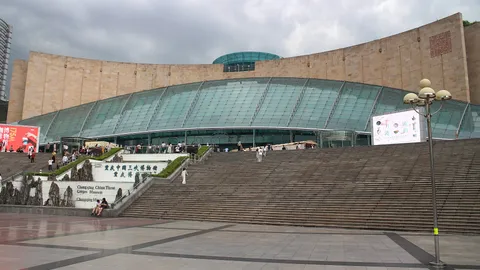
Across the Jialing from Yuzhong, Jiangbei is where a lot of Chongqing actually shops, eats and goes out. Guanyinqiao is the big, flat, busy shopping district; Jiangbeizui is the newer financial district on the tip facing Chaotianmen, with the Grand Theatre and wide riverside parks. Here is how to get around, where to find the things you miss from home, and a walk that links the two.
Best of
The best night views in Chongqing
Chongqing's towers climb the hills between two rivers, and after dark the whole peninsula lights up. Here is where to see it from: the bridge in front of Hongyadong, Nanshan, the cableway, the river cruise and a few quieter spots, with lights-on times, tickets and how to dodge the crowds.
Hotpot for beginners in Chongqing
Chongqing hotpot means beef tallow, a nine-square grid and a lot of chilli. Here is how the pot works, what to order and how long to cook it, plus hotpot in wartime air-raid shelters and a couple of Jianghu dishes for the night you want something else.
The best teahouses in Chongqing
Chongqing once had more teahouses than Chengdu, and a bowl of tea on a bamboo chair is still the best way to slow down in this steep, busy city. Our picks range from a 1980s workers' teahouse loved by painters to old cinemas and office buildings turned into tea halls, plus riverside venues with Sichuan opera.
Top 10 parks in Chongqing
Chongqing is a city of hills and two rivers, so its parks are often about views: cliff-top walkways over the old town, pavilions above the night lights, and forested ridges right next to the city. These ten mix central classics with big lawns, lakes and hiking hills for weekends. Most are free to enter.
Top 10 museums in Chongqing
Chongqing was China's wartime capital and a giant of heavy industry, and its museums tell those stories well. Most are free; some still ask for a quick real-name booking on WeChat, so carry your passport. Here are our ten favourites, from Three Gorges treasures and wartime sites to air-raid tunnels, steel mills and dinosaurs.
Top 7 climbing gyms and climbing walls in Chongqing
Chongqing has hosted climbing World Cups since 2012 and is home to a national climbing park, while smaller bouldering and rope gyms sit in malls and creative parks around the city. Most gyms rent shoes and run beginner sessions; prices and hours change often, so check Dianping or Meituan before you go.
Seasons & trips
Chinese New Year 2027 in Chongqing: dates, crowds and temple fairs
Chinese New Year falls on Saturday 6 February 2027, with nine days off from 5 to 13 February. This guide covers how the city changes over the holiday, train tickets in the travel rush, the temple fairs and lantern shows of recent years, Tongliang's fire dragons, the fireworks rules and what to do when a family invites you home.
Day trips from Chongqing: Wulong, Dazu, Jinfo Mountain and the Yangtze
The Wulong karst bridges, the Dazu carvings, Diaoyu Fortress, snow on Jinfo Mountain and a Three Gorges cruise. For each one you get train times, ticket prices, how to book with a passport and whether you need to stay the night. Checked in November 2026.